Open for Registration

RELIABILITY CENTERED MAINTENANCE - 2026 UPGRADED VERSION

14-15 December 2026Mumbai
17-18 December 2026Chennai
Course Brief

About the event

Course Brief

Almost every industry implements some form of Preventive Maintenance, scheduling equipment for replacement and overhauling activities based on a time-dominated pattern. Despite these noble efforts, unexpected problems, breakdowns, and failures still occur. Maintenance professionals are all too familiar with these challenges. Worse, operators often complain that Preventive Maintenance has worsened their equipment’s condition after routine overhauls.

There is a detailed technical explanation behind these issues. Some view maintenance as a transition from Preventive to Predictive Maintenance, while others see it as moving from reactive to proactive maintenance. These perspectives are often misinformed. While I respect Preventive Maintenance, I oppose its misuse and the addition of intrusive or forced activities to an ever-growing list of tasks.

In light of this, I invite your key personnel to a one-time event on "Reliability-Centered Maintenance."

This course will provide a deep understanding of maintenance, its capabilities, and its limitations, helping us better manage maintenance in our plants. This course will change your perspective on maintenance practices.

Overview

Course Overview

Course Overview

This course covers the principles of Reliability-Centered Maintenance (RCM), a process used to determine the maintenance requirements of any physical asset in its present operating context. RCM involves asking seven key questions about the asset or system being maintained:

  • Functions and Performance Standards: What are the functions and associated performance standards of the asset in its present operating context?
  • Functional Failures: In what ways does it fail to fulfill its functions?
  • Failure Causes: What causes each functional failure?
  • Failure Consequences: What happens when each failure occurs?
  • Failure Significance: In what ways does each failure matter?
  • Predictive/Preventive Actions: What can be done to predict or prevent each failure?
  • Proactive Task Alternatives: What should be done if a suitable proactive task cannot be found?

Background and Importance of RCM

  • RCM was developed by Stanley Nowlan and Howard Heap from United Airlines and emerged from one of the most important pieces of research ever done on equipment.
  • RCM explains both the capabilities and limitations of scheduled Preventive Maintenance.
  • RCM is a process to determine what should be done to ensure that physical assets continue to performas desired in their present operating context.

Course Objective:

  • Gain a deeper understanding of what it takes to make our maintenance most effective and efficient.
  • Recognize that maintenance tasks should be based on the consequences of failures.
  • Learn when to use different maintenance tasks with the help of a Decision Diagram.
  • Understand the six failure patterns and their impact on our daily maintenance activities.
  • Apply Reliability-Centered Maintenance principles in our everyday tasks.

Why Attend This Course?

If you are satisfied with the way you and your team perform maintenance, then this course may not be necessary for you. However, if you have any doubts about the effectiveness of your current Preventive Maintenance strategy, despite your best efforts, then this course is essential. It will provide you with a deeper understanding of maintenance and help you improve your maintenance practices.


AGENDA

2 Day Agenda

Module 1:

Changing the Maintenance Culture :

  • Welcome and introduction by the resource speaker
  • Pre-RCM quiz
  • Discussion on challenges facing modern maintenance culture
  • Is it really possible to eliminate equipment failures completely?
  • The need for effective and structured maintenance systems
  • Overview of World Class Maintenance Excellence
Module 2:

Introduction to RCM :

  • Evolution of maintenance generation
  • Common beliefs in maintenance and the reality of equipment failures
  • Understanding equipment failure fundamentals
  • How maintenance influences equipment reliability
  • Discussion on the limitations of preventive maintenance
  • History of RCM: Its origins in the airline industry and beyond
  • Basic questions to answer regarding RCM implementation
Module 3:

Understanding MTBF (Mean Time Between Failures) :

  • Explanation of MTBF
  • Are MTBF and MTTF the same or different?
  • Limitations of using MTBF
  • Reliability explained through formulas
Module 4:

Deriving the RCM Information Worksheet (FMEA) :

  • Preparing functions
  • Distinguishing between a function and a feature
  • How to write a function
  • Explanation of RCM operating context
  • Primary and secondary functions
  • Exercises on writing functions
  • Defining functional failures (breakdowns, function loss, and reduction)
  • Identifying failure modes, their categories, sources, and selection criteria
  • Writing failure effects and determining key points in the and reduction) selection criteria failure effect
SPEAKER

Speakers

Program Led by Renowned International Expert
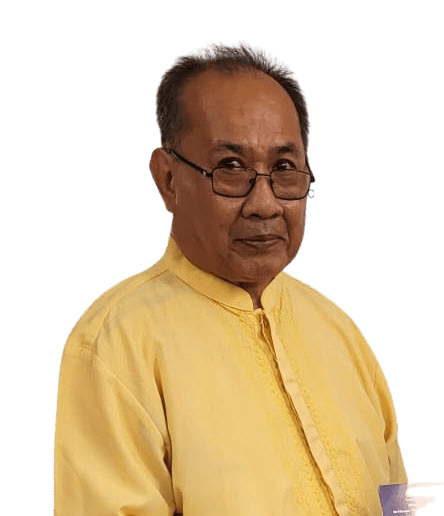
Mr. Rolly Angeles

Mr. Rolly Angeles

Rolly, is a seasoned international reliability and maintenance consultant with 30 years of solid experience in the field. He had been invited in different countries and have conducted reliability and maintenance trainings in United Arab Emirates, India, Malaysia, Indonesia, Nigeria, Bangladesh, Botswana, Brunei, Thailand, China and South Africa. His portfolio of maintenance trainings include Maintenance Management courses on TPM, Lubrication, Tribology, Condition-Based Maintenance, RCM, RCFA, Planned Maintenance, World Class Maintenance Management, The 12 Disciplines, Oil Contamination Control, Maintenance Indices and KPI's, Maintenance Management Strategies and much more. Rolly previously worked w/ Amkor Technology Philippines, as a TPM Senior Engineer, an industry engaged in the manufacture of IC products and spearheaded their Planned Maintenance initiative compose of maintenance managers and engineers. He was also responsible for the dramatic reduction of unplanned breakdowns in their TPM Journey as well as RCM implementation on their Facilities AHU units and as well as their substation equipment. Rolly had written 10 books in series based on his original book on World Class Maintenance Management - The Twelve Disciplines. Each of the books Rolly wrote details a specific discipline on maintenance.

Overview

TESTIMONIALS

TESTIMONIALS

  • It was very useful to recollect the basics of maintenance. Being a technical program, the way in which the faculty explained the concepts was very good and attractive. More positive insights were given during the presentation. The best part is that we are made aware of the lying human and latent cause behind any physical cause that leads to the failure. The learning materials provided and the case studies presented were very relevant and were very useful to the program. A complete transition revolution in the maintenance approach attitude can be achieved through this program. The best part is that he used his passion to explain the concepts in such a beautiful way. From R. Rjalaksham, Associate Manager Sterlite Industries, India
  • We were able to know more about maintenance, its causes and types. Understand more about lubrication and types of Spare Parts. Reasons for maintenance. Knowing more about oil change and the use of by-pass filtration. Learned how to reduce cost for maintenance. From Name withheld, Stolt Neilsen
  • Topics were well explained using layman's terms. Training was adjusted according to our requirements. Sufficient training materials were given. From Albert Siochi, Maintenance Support Manager, Stolt Nielsen
  • Instructor is a subject matter expert. Knows how to explain thoroughly and explained it well. Good materials during the training. Have gathered additional knowledge with regards to World Class Maintenance and understanding more the importance of how our team contributes to our company and to the industry we are working for. Mr. Rolly shared the knowledge. He had the passion that in the two days seminar we always have a take home. From Precious Quistorio, Maintenance Support Administrator, PMS Support Team Deeper understanding about maintenance. Understanding equipment failures and RCM, Life Cycle Maintenance and Management, Spare Parts Management, different strategies and patterns of failure, and Root Cause Failure Analysis. From Deanna Decena, Senior Maintenance Support Administrative
  • Eye-opening that we should not only focus on what the manual dictates. Maintenance is such a broad topic which everyone should learn for a better working experience. All topics in the training are discussed well and understood. From Arian Jeliza Legaspi
  • Learned the maintenance approach for reactive, preventive, predictive and proactive maintenance strategy. Realization on how important the training and skills with respect to every maintenance strategy. Changing culture from mechanic/reactive approach to RCM and RCFA, From Alfredo Villaver, Veco Lights
  • Real life scenario. Interesting and no dull moments. Facilitator has an actual experience on the topic. Facilitator is well knowledgeable on the topic. A seasoned speaker and full of inspiration. From James Binoya, Supervisor
  • Very entertaining and good speaker. Well explained presentation. Rocking Rolling Stones. Superv Powerpoint skills. From Francis Baltazar Asensi, Substation and Distribution Specialists
  • Gave us more knowledge about maintenance techniques. Gave us an idea to maintain and gave us a guide on Preventive, Predictive, Proactive and Condition-Based Maintenance. From Wendel Chua, Substation
  • The presenter is a very good communicator. The materials used are relevant and applicable from our end. The presenter is deeply knowledgeable with his topics. From Christopher Serojano, Head, Distribution Services
Register

Reserve your place

One form for every audience — choose how you’re joining below.

Want to Speak at an IBC Event?

Share your expertise with industry leaders and decision-makers. Interested in speaking?

Get in touch
CTA image

Bringing IBC In-House?

Custom training tailored to your organization’s needs, delivered by experienced industry experts.

Enquire now
CTA image